Reformer Pilates After 50: Rebuilding Mobility Without Risking Injury
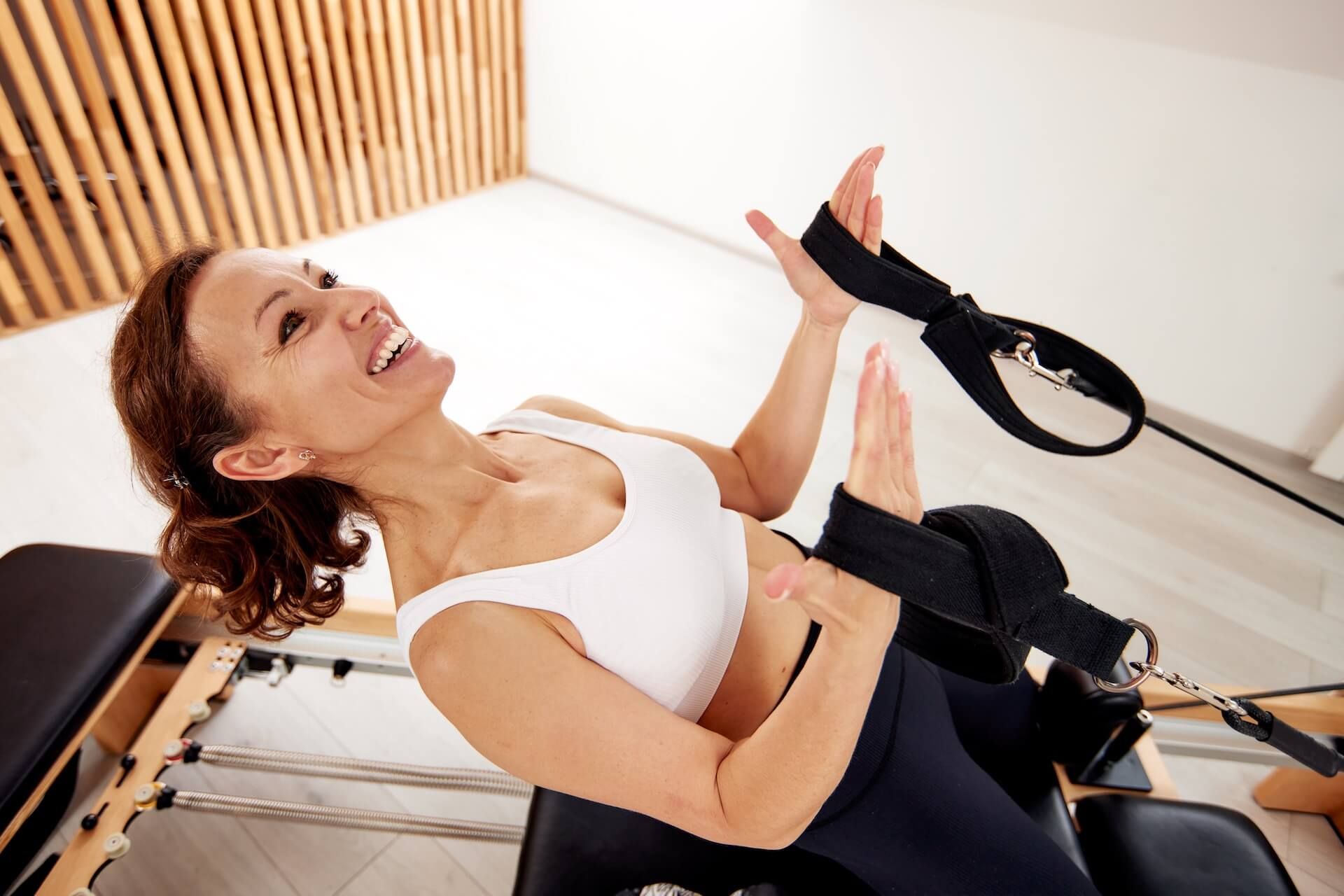
Something has shifted. You used to garden all afternoon and feel fine the next morning. You used to sleep through the night without a hip aching. You used to stand up from a low chair without planning the movement first. None of this is catastrophic, but it is real, and the exercise that suited you at forty does not quite fit anymore.
Most people in their fifties and sixties end up choosing between two options that are both wrong. The first is doing nothing, which means losing a little more strength, a little more balance, and a little more mobility every year. The second is pushing through gym classes or fitness formats that were designed for younger bodies, where the load is too high, the pace is too fast, and the instructor cannot see whether your left knee is tracking properly because there are twenty-five other people in the room.
BEFORE WE GO FURTHER
This article is educational and is not a substitute for medical advice. If you are managing a health condition, recovering from surgery, or have concerns about bone density, blood pressure, or balance, please consult your clinician before starting a new exercise program.
The reformer offers a third option. Its resistance is adjustable, which means it can meet a body where it actually is rather than where a class template assumes it should be. Its positions are supported, which means joints that cannot tolerate impact can still be loaded safely. And the work is progressive, which means you build genuine functional strength over months rather than simply maintain what remains.
What follows is an honest account of what changes in the body after 50 that matters for exercise choice, why the reformer's design addresses those changes specifically, what starting actually looks like, and where the real limits are.
What actually changes in the body after 50
You know your body has changed. You do not need to be alarmed about it. But understanding the specifics helps explain why the right exercise at this stage of life looks different from the right exercise at thirty.
Muscle mass declines at roughly one percent per year after forty, and the rate accelerates after sixty. The clinical name for this is sarcopenia, and it is the single most important reason to keep loading your muscles as you age. It is also the reason that light stretching alone, however pleasant, is not doing what your body needs. Muscle responds to load. Without load, it continues to decline.
Bone density decreases meaningfully after menopause for women and more gradually for men. Loaded exercise slows the rate of loss, which is one of the clearest arguments for continuing to do strength work rather than avoiding it. If you have been told you have osteoporosis or osteopenia, this does not mean you should stop exercising. It means you should choose exercises that account for it, and your instructor needs to know.
Cartilage
thins. Connective tissue loses elasticity. Joints that tolerated impact at thirty stop tolerating it at fifty-five. This does not mean you should stop loading them. Unloaded joints deteriorate faster than loaded ones. It means the kind of loading matters more than it used to, and impact is no longer the right kind.
Balance and proprioception, your sense of where your body is in space, degrade subtly over decades. This is the underlying reason older adults fall, and it is more trainable than most people realise. The research on fall prevention is clear: strength and balance work together to reduce falls significantly. One without the other does not.
And
recovery takes longer. A programme that worked when soreness cleared overnight does not work when it takes three or four days. The cadence of exercise matters as much as its content.
Why the reformer is different from a gym, a mat, or a chair
The reformer was not designed for older adults specifically, but its mechanical features happen to solve the problems this age group encounters more precisely than any other piece of equipment available.
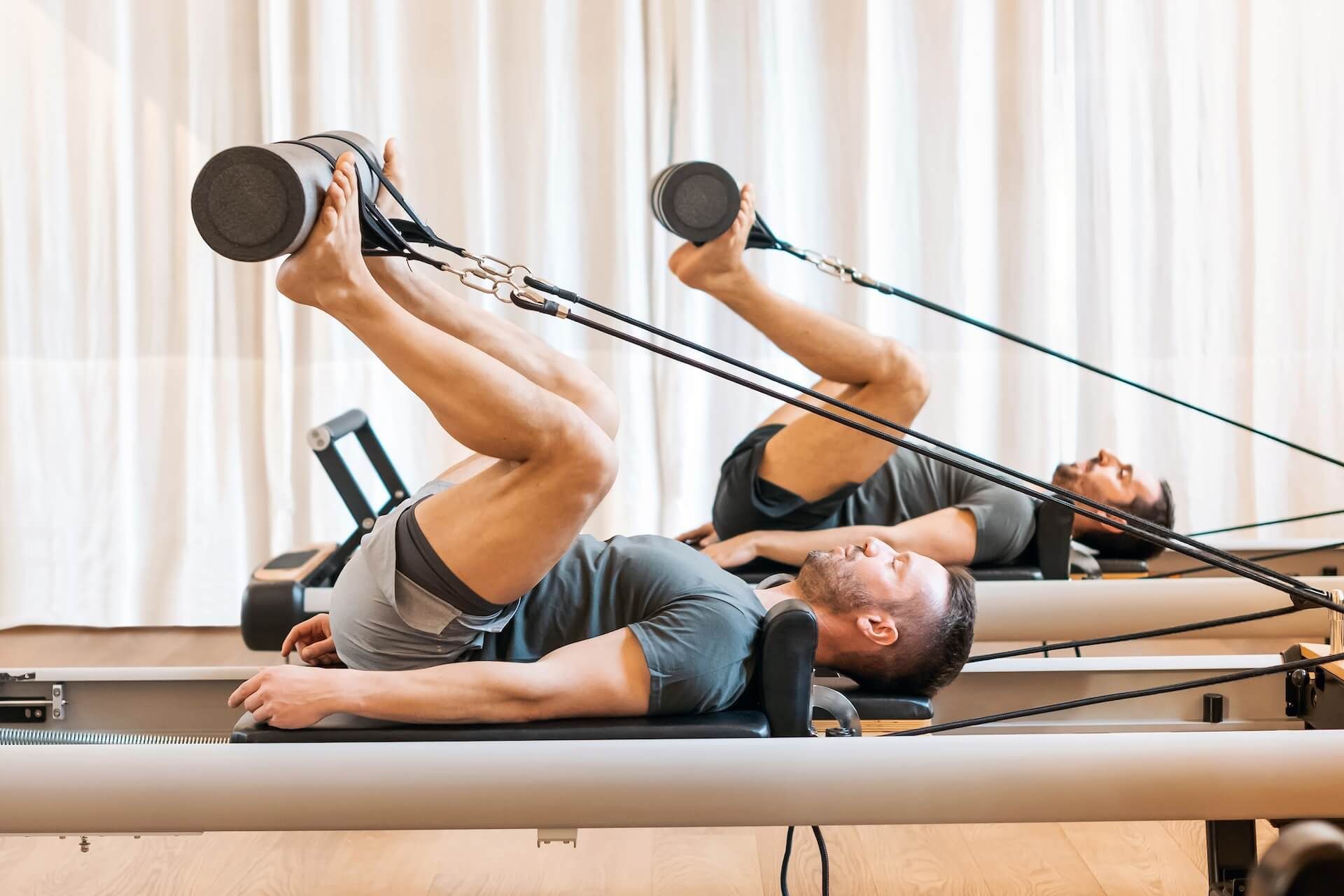
Spring resistance is adjustable. This sounds simple, and its implications are not. The reformer can be set lighter than your own bodyweight, which is critically important for someone returning to movement after a knee replacement or managing arthritic joints. It can also be set heavier as your capacity builds, so the progression is genuine rather than capped. No other piece of strength equipment starts below bodyweight and scales up continuously.
Most reformer work happens lying down or in a supported seated position. This reduces spinal compression, limits joint impact, and lowers the balance demands compared to standing gym work. For a body with an arthritic spine or compromised balance, this is the difference between an exercise that helps and one that aggravates.
Christine Clark, one of our senior instructors and trained in Stott Pilates and myofascial assessment, with a background working with rehabilitation clients, often points out that the springs do something no other setup replicates: they pull the carriage back whether you resist actively or not. This means every repetition includes a controlled deceleration phase. Deceleration is the movement quality most protective against falls, and on the reformer it is built into every exercise rather than being trained as a separate skill.
Our group classes cap at five. For a 62-year-old with a fused vertebra or a 58-year-old managing a hip replacement, this is not a luxury. It is a safety requirement. The instructor can see what is happening, adjust the spring, modify the position, and ensure that the work is appropriate for the body in front of them. In a class of twenty, that does not happen.
WHAT THE REFORMER DOES NOT DO
The reformer is not high-impact loading, so it is not a complete solution for bone density on its own. Walking, weight-bearing activity, and sometimes medical treatment matter too. It is not a substitute for a clinician after acute injury. And it is not an entire fitness regimen. Think of it as a foundation that makes everything else work better, not a replacement for all of it.
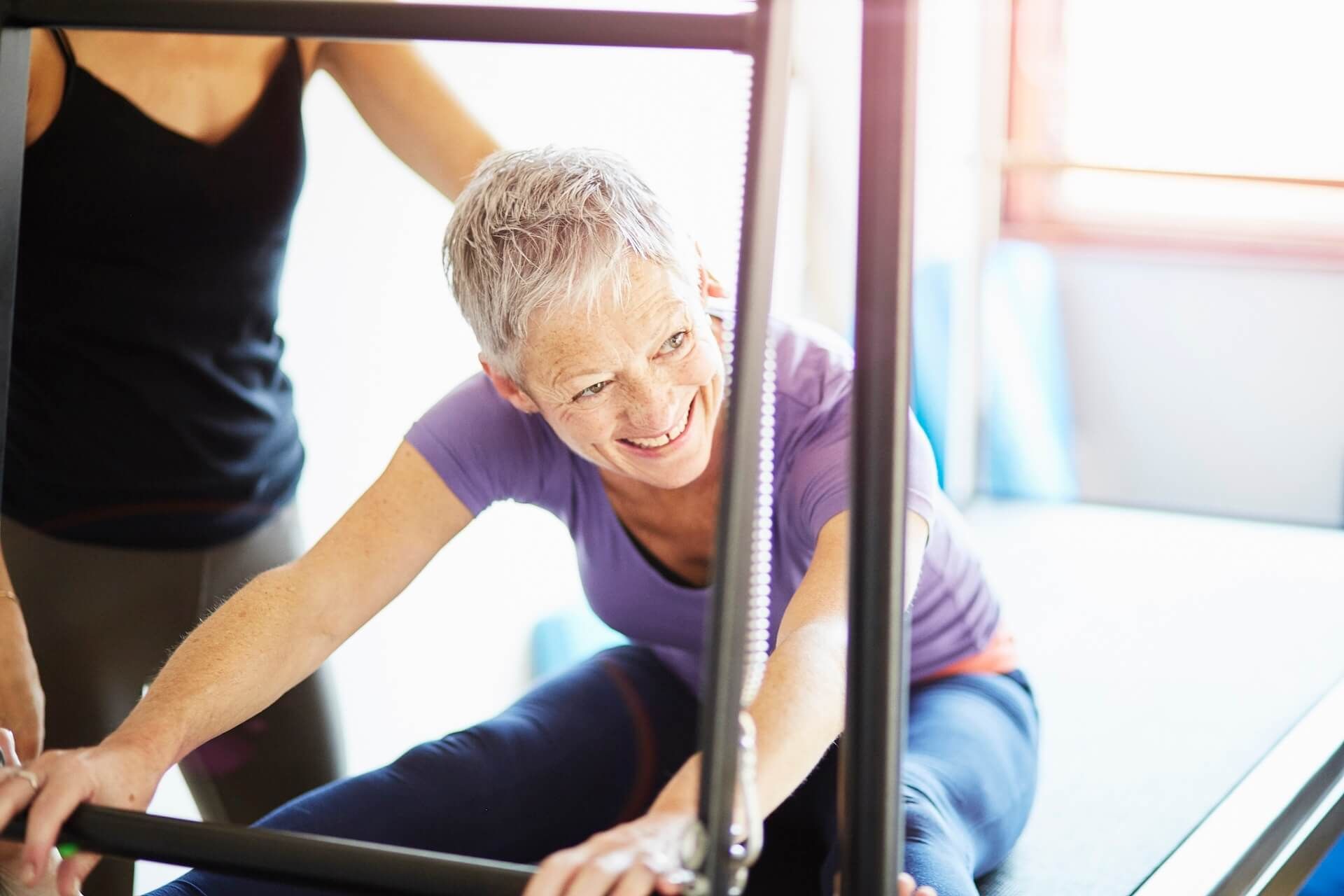
What starting looks like if you've never done this before
The equipment looks more complicated than it is. The reformer has a sliding carriage, a set of springs, straps, and a footbar, and all of it serves a clear purpose that makes sense once someone shows you. The first session is spent learning it, and most people feel comfortable with the mechanics by the end of that hour.
The concern that everyone else in the class will be more advanced is understandable and largely unfounded. With a maximum of five people in a group, the instructor scales the work individually. There is no routine to keep up with. There is no back row to hide in, and there does not need to be.
For most people over 50, a one-on-one private session is the right place to begin. Not because it is more expensive, but because it lets the instructor learn your joint history, your medical considerations, and your movement patterns before group work begins. A private does not assume you know anything. It starts where you are.
Wear comfortable, form-fitting clothing so the instructor can see your alignment. Grip socks are standard and usually available at the studio. Bring water.
The first two weeks will feel unfamiliar. You will discover muscles you did not know you had, and they will be sore. You will feel
aware of your posture in a way you were not before, which is a sign the work is doing what it should. Most people feel awareness before they feel change, and the change follows.
When to talk to your doctor first
This section exists because the studio takes your safety seriously, not because the reformer is dangerous. Most people over 50 can begin reformer work without issue. There are specific situations where clinical clearance should come first:
Recent surgery
Hip, knee, spine, or shoulder replacement within the last three months. Your surgeon or physiotherapist should confirm you are ready for loaded movement, and the instructor needs to know what was done so the programme is adapted from day one.
Osteoporosis or significant osteopenia
Reformer work is safe and beneficial with proper modification. Certain forward-flexion exercises are contraindicated and must be replaced. Your instructor needs the diagnosis so he or she can program around it.
Uncontrolled blood pressure or cardiac conditions
A cardiologist should confirm that progressive resistance exercise is appropriate. Once cleared, the work is typically well tolerated.
Acute pain, numbness, or radiating symptoms
Corrective movement is a resilient tool. It is not a diagnostic one. If something is referring, radiating, or newly acute, a clinician should see it first.
Recent falls or diagnosed balance disorders
Worth mentioning to both your doctor and the instructor, so modifications are in place from session one. The reformer is excellent for retraining balance, but the starting point needs to be calibrated.
WE WELCOME REFERRALS
The studio welcomes referrals from physiotherapists, osteopaths, and family physicians, and works alongside clinicians when a client is returning from injury or managing a condition. If your practitioner has questions about what the work involves, they are welcome to reach out.
What the first year tends to look like
The arc is longer than what fitness culture usually describes, and that is the point. You are not training for a race or a reveal. You are building a practice that will still be working for you at sixty-five, seventy-five, and eighty-five.
Months one to three: Awareness
Movement patterns get corrected. Muscles that had been quiet for years wake up. Balance sharpens. Clients in this phase often report sleeping better and standing straighter before they notice anything they would call strength. The changes are real and structural, even when they are not dramatic.
Months four to six:
Strength
The work gets progressively harder as your body handles more, and the instructor adjusts the springs and the complexity accordingly. This is when most clients notice they are doing things with meaningfully less effort. Carrying groceries. Climbing stairs. Playing with grandchildren. Getting out of a car without bracing first. The strength is functional before it is visible.
Months six to twelve:
Sustainability
Twice a week holds gains and continues building slowly. This is the cadence most long-term clients settle into, and it is the cadence the evidence supports. The work by now is familiar enough that you can focus on refinement rather than learning, and the instructor can program more precisely because she knows your body. Most people who reach this point do not stop.
4 · Spinal decompression
After sequences that ask your spine to work, decompression gives it what it has been asking for since Tuesday. Short spine on the reformer places you on your back with the feet in straps, and lets the spring gently draw the spine into length as the legs move overhead. Spine stretch forward with resistance uses the carriage to guide a controlled forward fold that lengthens the whole posterior chain. These are the sequences most clients want to stay in longer than the class allows. Backs that have been compressed all day recognize the sensation immediately.
How to start
The recommendation for anyone over 50 is to begin with a
one-on-one private session, especially if you have joint history, previous surgeries, or medical considerations. The first private is a conversation and a movement assessment. You will talk about your history, your concerns, and what you hope to get from the work. You will move through basic patterns while the instructor watches. There is no pressure to perform. The session is for learning, in both directions.
Most clients move into
small-group 8-week sessions after two or three privates, once movement patterns are established and the equipment feels familiar. Some, particularly those with more complex histories, stay in privates longer. That is appropriate and common.
If you are a physiotherapist, osteopath, or physician and would like to refer a patient, the studio welcomes the conversation. We are accustomed to working alongside clinicians in the Pointe-Claire and West Island community and can coordinate on programming when a patient's history warrants it.
Common questions
Is reformer Pilates safe if I have arthritis?
For most people with osteoarthritis, yes. The reformer's spring resistance can be set lighter than bodyweight, which allows joint loading without impact. Supported positions reduce the compressive forces that make weight-bearing exercise painful. That said, inflammatory arthritis (such as rheumatoid arthritis) in an active flare is different. Discuss it with your rheumatologist, and let your instructor know.
Can I do reformer Pilates if I've never exercised before?
Yes. The reformer is one of the few pieces of equipment that genuinely scales to a complete beginner, because the resistance starts below bodyweight and the positions are supported. A private session first lets the instructor teach you the equipment at a pace that makes sense. There is no baseline fitness requirement.
How often should I practice at this stage of life?
Twice a week is the cadence most supported by the evidence, and it is what most long-term clients settle into. Once a week maintains existing capacity. Three times a week is faster progress if recovery allows. The twice-weekly rhythm gives the body time to adapt between sessions without losing ground, which matters more as recovery lengthens with age.
What if I have osteoporosis?
Reformer work is safe and often recommended for people with osteoporosis, provided the instructor knows. Certain loaded forward-flexion exercises are contraindicated and must be replaced with alternatives. Extension and lateral work are typically safe and beneficial. Let the studio know when you book so the programming reflects your diagnosis from the first session.
A NOTE FROM THE STUDIO
This article is educational and is not a substitute for medical advice. If you are managing a health condition, recovering from surgery, or have questions about whether reformer work is appropriate for your situation, please consult your healthcare provider. Pilates West Island was founded by Kyle Murray and Jim Roberts. The instructors at the studio are certified through Stott Pilates/Merrithew
and work regularly alongside physiotherapists, osteopaths, and family physicians across the West Island of Montreal.
BEGIN WITH INTENTION
Book an Intro Private Session
Tell us about your body, your history, and what you are hoping for. We will take it from there, at your pace.
Recent Posts