Reformer Pilates for Men: What Golfers, Hockey Players, and Runners Notice After Six Sessions
Your drive is fifteen yards shorter than it was three summers ago, and your swing coach keeps telling you it is a flexibility problem. Or your hips feel locked by the second period, and you are pushing off a stride that used to be longer. Or your hamstrings tighten somewhere around kilometre six, every run, predictably, and the stretching you do afterward has stopped doing anything.
Somewhere along the way, a physiotherapist or a teammate or an advertisement told you to try Pilates. You probably ignored it. Fair enough. Most articles written about Pilates for men spend three paragraphs arguing that it is not just for women before they say anything useful, and by then you have closed the tab.
This article is not going to do that. What follows is a sport-by-sport account of what the reformer actually changes, and why the athletes who try it tend to keep going. One mechanism runs underneath all three sports: the reformer trains the thing most athletes are missing, which is controlled range, rotational stability, and the ability to produce force through a lengthened position. Everything in the gym trains the opposite
Six sessions is roughly three weeks at twice-weekly cadence. It is not a program, and it will not rebuild you. It is long enough to notice something specific, which is all you need in order to decide.
Why athletes miss what the reformer trains
Most sport training is concentric. You push, you sprint, you drive, you accelerate. Over years, this builds athletes who are extremely strong in short ranges and progressively weaker everywhere else. The strength is real, but it lives in a narrow band, and the edges of that band keep contracting without anyone noticing.
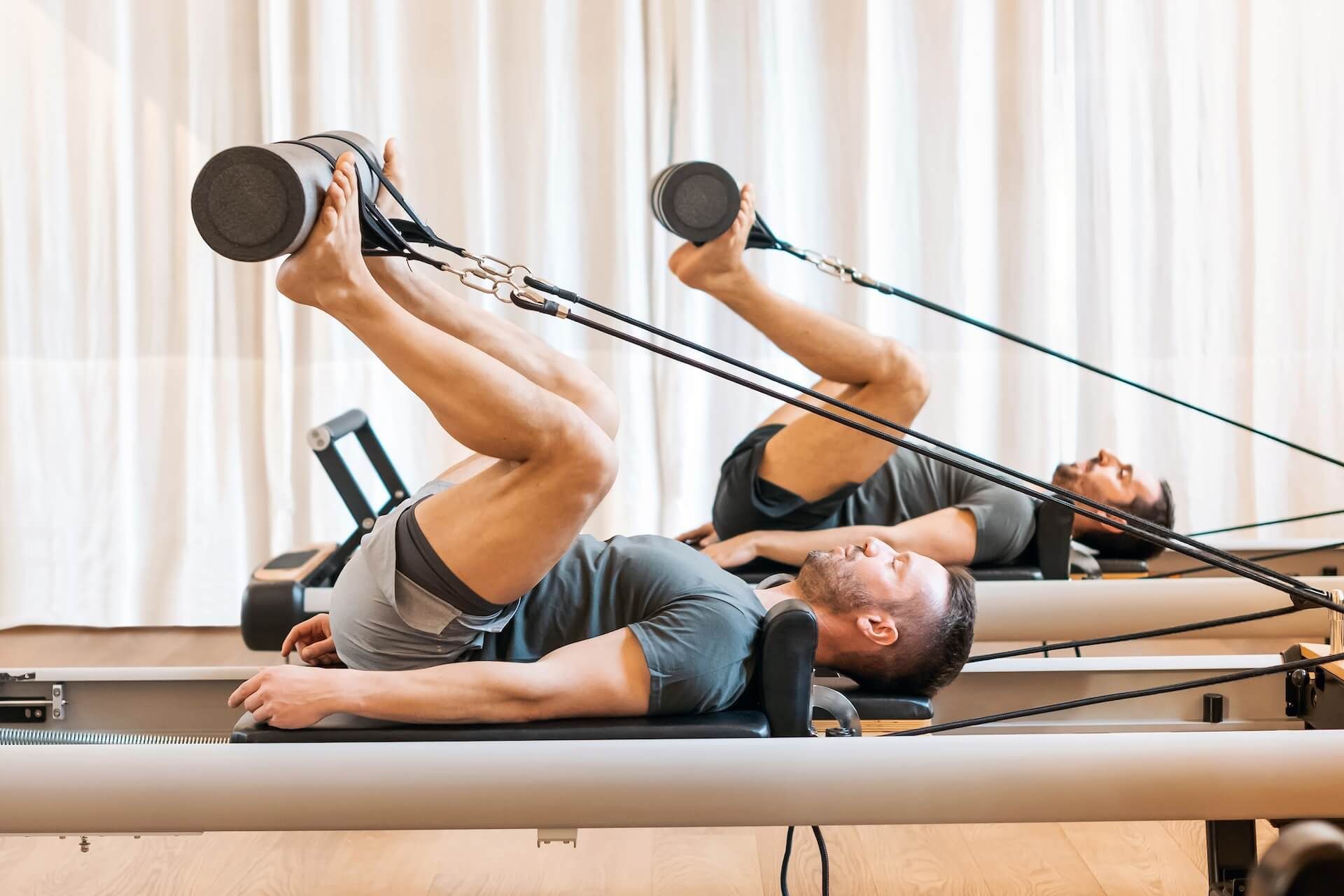
Spring resistance changes the shape of the work. On the reformer, the carriage returns under tension, which means every repetition has a controlled eccentric phase built into it. You are not just producing force. You are producing force while lengthening, and then decelerating the load on the way back. Weights can be programmed this way with effort and expertise. On the reformer it is unavoidable, because the equipment is designed around it.
That matters for a second reason. Injuries mostly happen during deceleration, not acceleration. The hamstring goes when the leg is slowing down. The groin goes when the stride is being controlled, not when it is being driven. Reformer work is deceleration training in a form that does not look like it, which is why athletes who add it tend to spend fewer weeks on the sidelines.
Then there is rotation. Rotation in sport is supposed to come from the thoracic spine, the middle section of your back, which is built for it. The lumbar spine is not. When the thoracic spine stiffens, and it does stiffen in anyone who sits at a desk between games, the body finds the rotation somewhere else. It borrows it from the lower back. This is a large part of why golfers herniate discs and why hockey players tweak obliques doing something they have done ten thousand times.
The last piece is hip mobility, though mobility is a slightly misleading word for it. Passive flexibility is close to useless in sport. What matters is strength at end range: the ability to produce force in the positions at the outer edge of your movement, which is exactly where skating strides and running gaits live.
"The reformer is not training you to be more flexible. It is training you to be strong in the places you currently go soft."
- Kyle Murray
SPORT ONE: GOLF
Rotational power comes from the thoracic spine
Distance off the tee is largely a question of separation: how far your shoulders can turn relative to your hips at the top of the backswing. Coaches call it the X-factor. The wider that gap, the more elastic energy you store, and the more of it you release through the ball.
Here is the part that gets missed. Separation is a thoracic mobility question before it is a strength question. You can add twenty pounds to your squat and gain nothing off the tee if your mid-back will not rotate, because the power has nowhere to come from.

Most amateur golfers have thoracic spines that rotate poorly, and the body solves the problem in one of two ways. It over-rotates the lumbar spine, which produces a decent-looking backswing and a sore lower back by the fourteenth hole. Or it under-rotates the shoulders, which is safer and costs distance. Many golfers do both, alternating depending on how the round is going.
Reformer work addresses this from three directions at once. Rotational sequences, spine twist with the carriage moving and side-lying rotation against the straps, train the thoracic spine to rotate actively rather than being stretched into it. Core work on the reformer is largely anti-rotational, which teaches the lumbar spine to resist rotation while the thoracic spine produces it. That is precisely the pattern a sound golf swing requires, and it is close to impossible to train with a cable machine and good intentions.
The third piece is hip internal rotation, which almost nobody works on. Your lead hip has to internally rotate for you to get through the ball. When it cannot, the finish position collapses and the lower back absorbs what the hip should have handled. If your back is stiff after a round rather than during it, this is usually why, and it connects directly to how the reformer addresses lower-back pain from sitting.
AFTER SIX SESSIONS
A noticeably freer shoulder turn at the top of the backswing.
Less lower-back stiffness after eighteen holes.
A more consistent finish position, because the hips can actually get through the ball.
This is the reason a steady number of golfers from the West Island's clubs end up in the studio, usually in the weeks before the season opens. We go deeper on the swing mechanics in the golfer's reformer, in more detail.
SPORT TWO: HOCKEY
Hip mobility is the skating stride
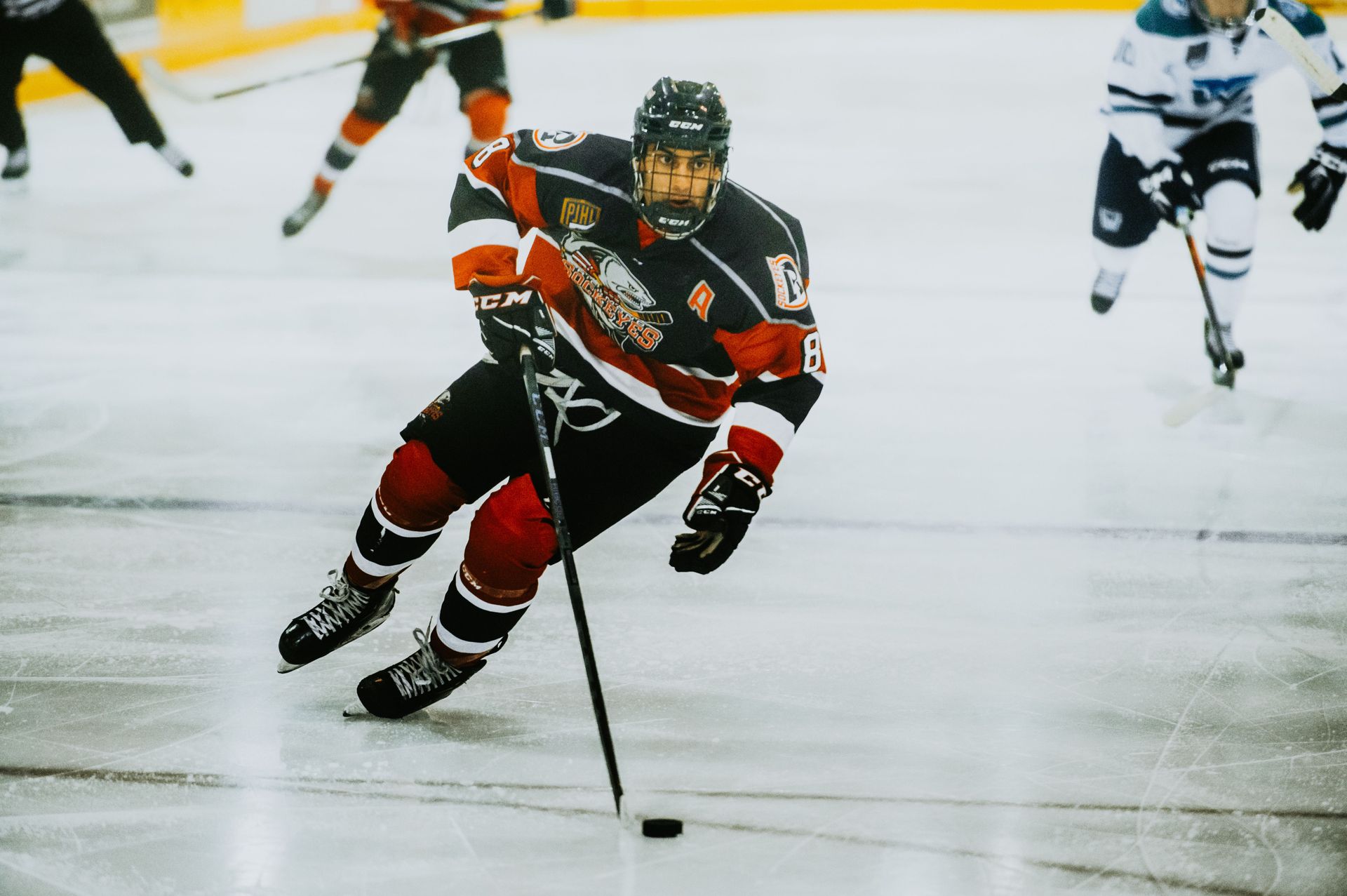
Skating power comes from hip abduction and external rotation at end range. That is the position at the top of a stride push, the moment the leg is furthest out and about to drive. Everything before it is set up. Everything after it is recovery.
Hockey players build enormous strength in the quads and glutes. What they lose, quietly, over years of the same movement patterns, is the range in which that strength can be applied. By thirty, most rec-league players are pushing off from a range noticeably shorter than the one they had at twenty. The strength is still there. The room to use it is not.
You will not feel this as a mobility problem. You will feel it as effort. The stride takes more out of you than it used to, and you attribute that to age or conditioning. Some of it is. A meaningful part of it is that you are producing the same power over a shorter distance and paying for the difference in energy.
Feet-in-straps work on the reformer trains hips in almost exactly the patterns skating demands. Leg circles, frog, and adductor sequences move the hip through abduction and external rotation under light spring load, which builds strength at the outer edge of the range rather than just permission to get there.
The adductors deserve their own sentence, because they are the muscle group hockey players injure most. On the reformer they are strengthened through controlled range instead of static holds, which is a different quality of tissue resilience and a considerably more useful one when your groin is being asked to decelerate a stride at speed.
Anti-rotational core work builds the trunk stiffness that lets the hips generate force without the lower back absorbing it. And thoracic mobility shows up here too, in stickhandling posture and in shot power, for the same reason it shows up in golf.
AFTER SIX SESSIONS
A longer stride that takes less out of you.
Less groin and hip flexor tightness between games.
Faster recovery, because the muscles that were locked at the end range are now working at the end range.
The off-season is when this work pays best. During the season you are maintaining. In April and May you have the time to change how you move, which is a different project entirely.
SPORT THREE: RUNNING
Hamstring resilience is about length under load
Runners do not tear hamstrings because their hamstrings are weak. Most runners with hamstring problems have perfectly strong hamstrings, which is what makes the injury so frustrating and so repetitive. They tear them because that strength lives in a short range, and the moment of highest strain in the running gait happens at length.
The relevant instant is the end of the swing phase, milliseconds before your foot hits the ground. The leg is extended, decelerating rapidly, and the hamstring is being asked to control that deceleration while lengthened. If it can only produce force in a shortened position, something has to give, and it usually gives at the worst possible moment in a race you spent four months training for.
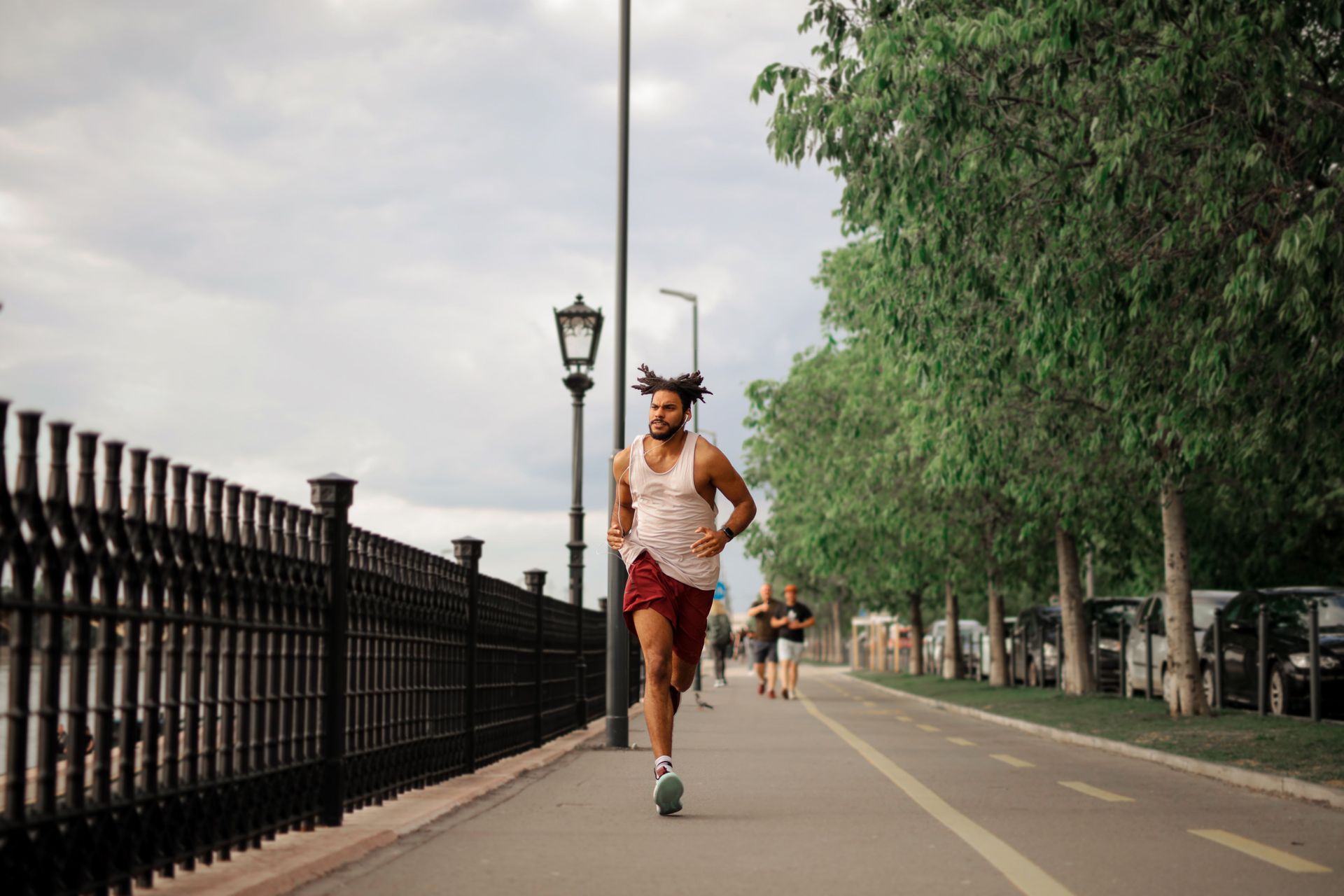
Stretching does not address this, because stretching lengthens tissue passively and the problem is force production at length. The reformer trains that specific quality. Long-box work and feet-in-straps hamstring sequences load the hamstring eccentrically through range, which is the closest thing to strain-injury prevention that exists in a movement practice.
Single-leg reformer work does something else worth having. It exposes asymmetry. Nearly every runner has a stronger side and a weaker side, and nearly none of them can feel it, because running is forgiving enough to hide the difference until it becomes an injury. On the reformer, with the carriage responding differently under each leg, the difference becomes obvious in about ninety seconds.
Deep core work stabilises the pelvis and reduces the compensation patterns that produce IT band irritation and hip pain. And hip flexor lengthening matters more for runners than for most athletes, since the psoas shortens a little with every stride. Restoring its length gives you back stride distance you were losing without noticing, rather than forcing a longer stride through the front leg, which is how people get shin splints.
AFTER SIX SESSIONS
Less hamstring tightness in the morning after a long run.
A more even gait, most noticeably over longer distances.
Fewer of the small niggles that quietly build into layoffs.
More on gait mechanics and weekly structure in the runner's reformer, in more detail.
What "six sessions" actually means
Six sessions is three weeks at twice a week. It is a test, not a program, and it is worth being clear about what a test can and cannot tell you.
The first two sessions are mostly information. What tends to happen is that you discover how much you did not know about how your own body moves, which is a strange experience for someone who has been athletic their whole life. Most men find the first session harder than they expected and harder in an unfamiliar direction. Not cardiovascular, not maximal load. Control.
By session four, some of it starts to feel automatic. Golfers report that the backswing feels different before they see anything on the course. Hockey players notice they warm up faster. The change is small and specific rather than dramatic, and it is real.
By session six you have enough information to make a decision. Most people continue, though the honest framing is that six sessions gets you the beginning of a change rather than the change itself. The athletes who stop getting injured are the ones who keep going, twice a week through a season or once a week as maintenance. That is the version that works.
WORTH SAYING PLAINLY
If you are currently injured, see a physiotherapist or a physician before you book anything. Reformer work is a strong complement to rehabilitation and a poor substitute for a diagnosis. We work alongside clinicians in the West Island regularly and are happy to do so with yours.
How most male athletes start
The recommendation for a first-timer is a one-on-one private session, and the reason is practical rather than commercial. The reformer has springs, straps, a moving carriage, a footbar, and a box, and a first group class spent learning where everything is and what it does is a class not spent training. A
private session gets you productive by your second visit instead of your fourth.
It is also worth naming what the room is like, because a lot of men have written off Pilates based on the aesthetic of the industry rather than the practice itself. Our
small-group reformer classes cap at five. There are no mirrors to perform in front of and no music at 130 beats per minute. The instructor knows your name and what your left hip does under load. Most of the men who come in expecting a class they will have to endure are surprised by how little of it resembles what they had pictured.
Pilates West Island has been working with male athletes for more than a decade and runs among the earliest dedicated men's programming on the West Island. Our instructors are certified through Stott Pilates and Merrithew and have spent a good part of that time teaching golfers, skaters, and runners who arrived skeptical.
Common questions
Is reformer Pilates actually challenging for athletes?
Yes, though not in the way a hard training session is challenging. The difficulty is control rather than load or heart rate. Strong athletes routinely struggle with sequences that require producing force slowly through a full range while keeping everything else still. Most people finish their first session having found something they cannot do, which is usually the point.
How is this different from strength training or stretching?
Strength training builds force production, mostly in shorter ranges and mostly concentrically. Stretching lengthens tissue passively without teaching it to work at that length. Reformer work sits in the gap between them: producing force while lengthening, and controlling the return under spring resistance. It complements a strength program rather than replacing one.
Can I do Pilates during my sport's season, or is it off-season only?
Both, with a different purpose in each. In-season, once a week maintains range and helps with recovery between games without adding meaningful fatigue. Off-season is when you can train twice a week and actually change movement patterns, since you are not managing a competition schedule at the same time. Hockey players in particular tend to get the most out of April through August.
Do I need to be flexible to start?
No, and the men who are least flexible often see the clearest changes, because they have the most range to recover. Flexibility is an outcome of the work rather than a prerequisite for it. Spring resistance can be set lighter than bodyweight, which means positions that would be unavailable to you on a mat are available on the reformer from your first session.
A NOTE FROM THE STUDIO
This article is educational and is not a substitute for medical advice. If you are experiencing acute pain, radiating symptoms, or numbness, please consult a healthcare provider before beginning a movement program. Pilates West Island was founded by Kyle Murray and Jim Roberts. The instructors at the studio are certified through Stott Pilates/Merrithew and regularly work alongside physiotherapists and osteopaths in the West Island community.
SIX SESSIONS, THEN DECIDE
Book an Intro Private Session
Come in once. Let an instructor watch how you move and tell you honestly what is limiting you. If it is not useful, you will know quickly.
Recent Posts